UX case study · AI-accelerated Design Sprint · 2026

GoBags

Where do you put your bags between lives?

Role
Solo UX designer & builder
Methodology
Design Thinking · Compressed via Design Sprint
Output
18 hi-fi screens · 2 user flows · prototype
Timeline
3 hours · validation ongoing
Tools
Notebook · Claude AI · HTML/CSS

A city-scale luggage storage and last-mile delivery prototype for India's transit travellers. Built end-to-end in a 3-hour AI-accelerated Design Sprint, grounded in classic Design Thinking discipline.

01 · The brief

Why I picked this problem

India has the largest train network on Earth, three of the world's twenty busiest airports, and zero infrastructure for the most basic transit job: putting your bags down. I had carried this observation in my notes app for over a year. In March 2026, I gave myself a single afternoon to prove the problem was real, the solution was buildable, and that design thinking translated to AI-accelerated execution.

Constraint
Solo designer
No team to consult — every decision is mine to defend.
Constraint
3-hour build window
Forces brutal scope discipline.
Constraint
AI as co-pilot
Tests whether classic design thinking holds up at compressed speed.
02 · EMPATHIZE

Listening before designing

Design Thinking starts with empathy. Even in a compressed sprint, this phase cannot be skipped — it can only be condensed.

The observation that started it

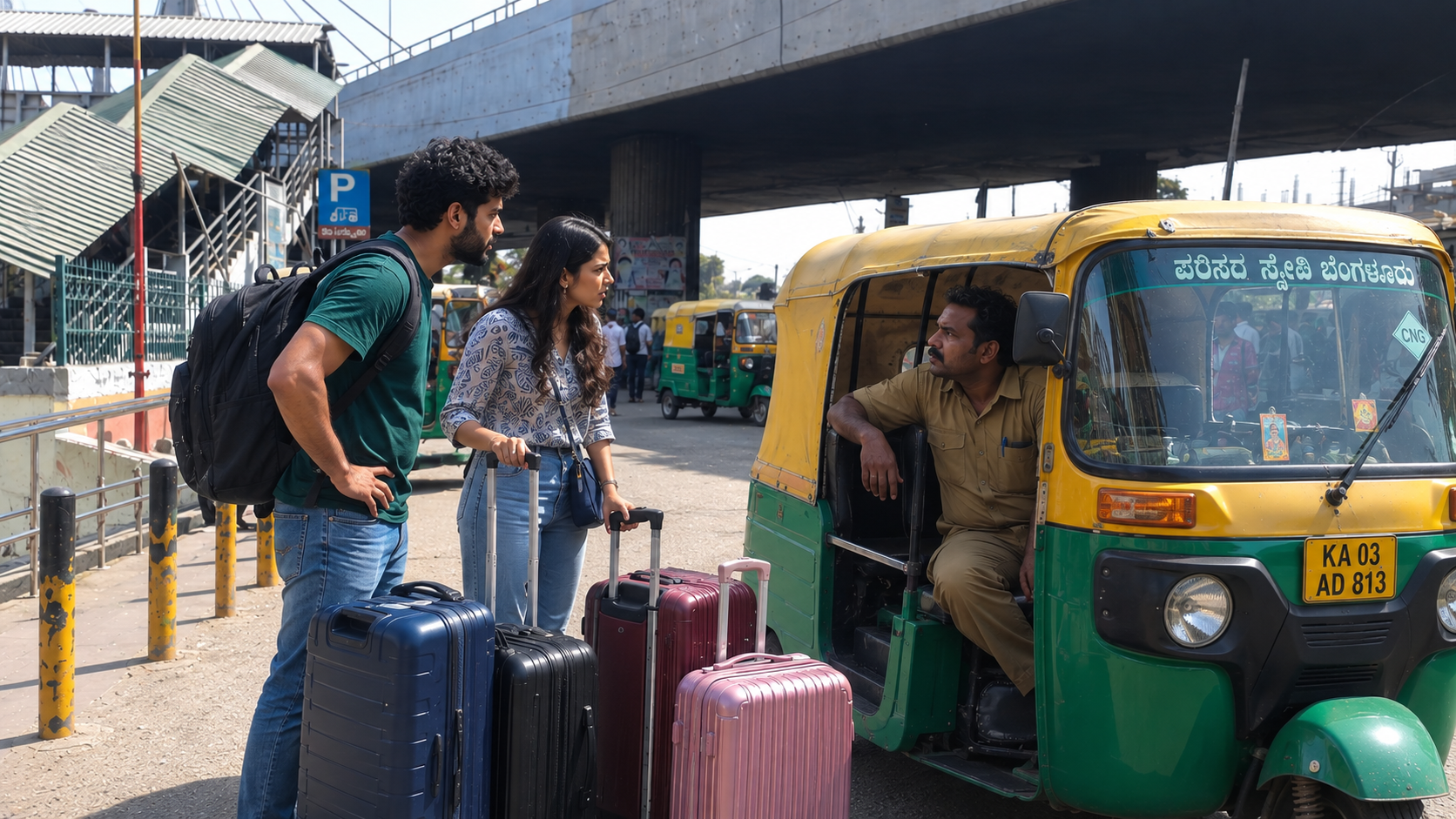
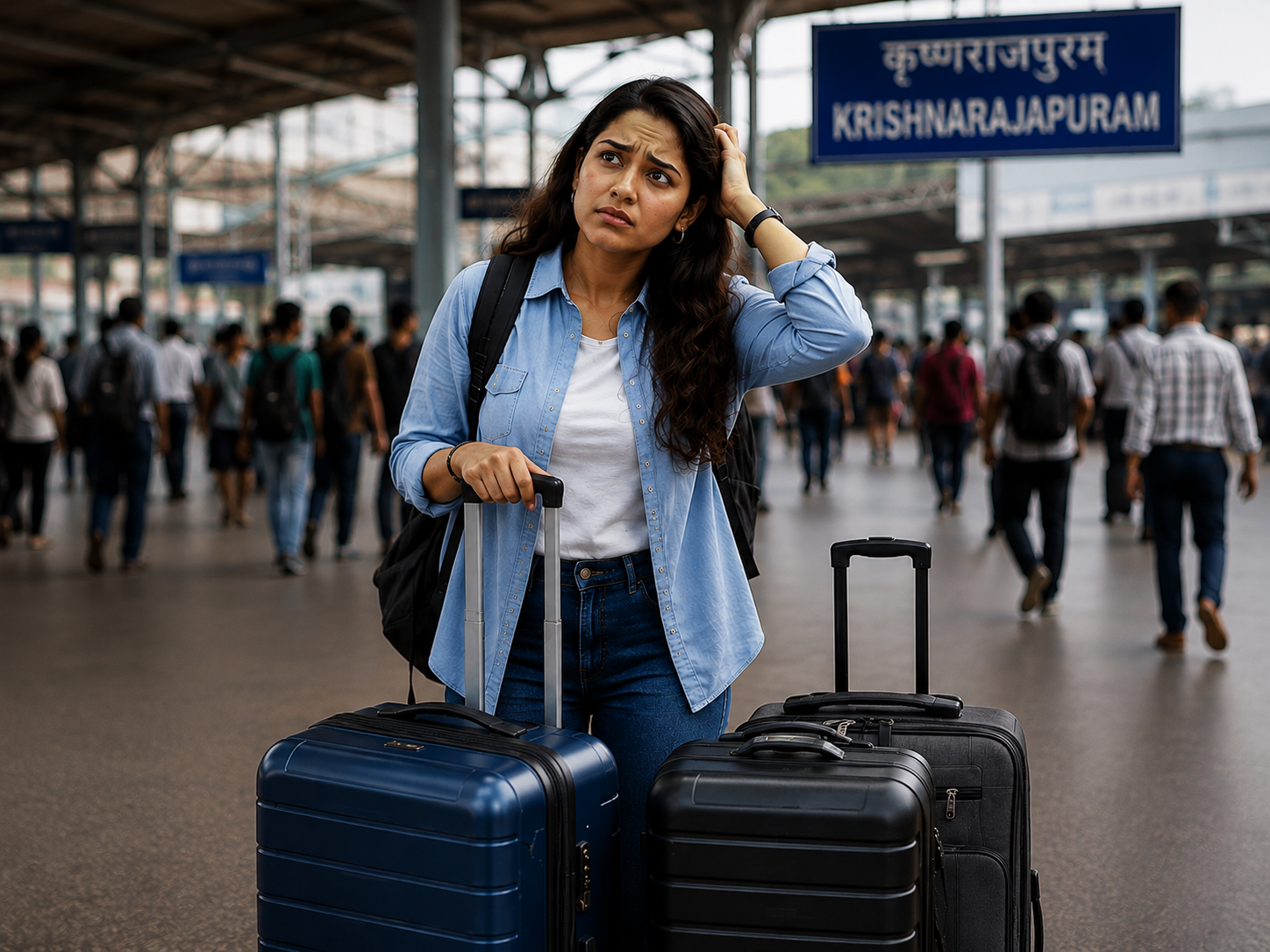
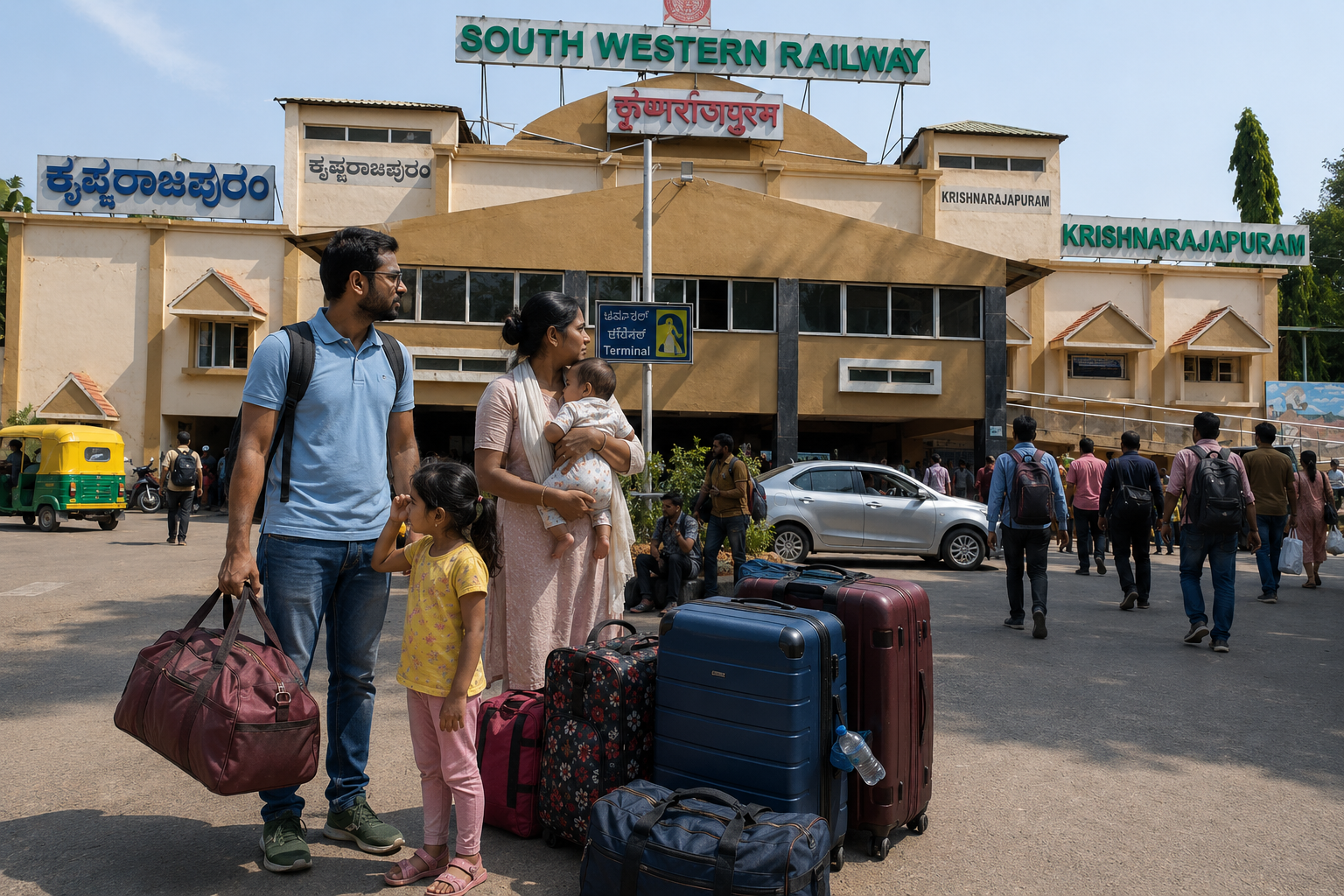
It started at Bengaluru City Railway Station. A young couple, four suitcases, arguing with an auto driver who wanted ₹600 to take them 2 km because they had nowhere to drop their things. Their flight was the next morning. A hotel meant paying for a full night. The station cloak room was closed.

I sat with that observation for a year before I designed anything.

Secondary research

Thirty minutes of structured research with Claude as a research partner. Two findings did most of the work.

The market that already solved this
  • Bounce — café and shop network for hourly bag storage in 100+ US cities.
  • Stasher — UK and Europe, partnered with hotels and tourist attractions.
  • Radical Storage — claims 5,000+ partner locations across 40+ countries.
The Indian transit reality
  • ~24 million daily train passengers across Indian Railways.
  • ~3 million daily passengers across the top 3 Indian airports.
  • Hotel check-in: 2 PM. Check-out: 11 AM. A 3–6 hour gap every traveller faces, every trip.

📌 Artifact placeholder — market-landscape diagram (global solutions vs Indian gap) will sit here.

User interviews

Validation in progress

A vague problem produces a vague product. To move beyond observation, structured interviews with the user segments most affected:

  • 5–7 participants across three segments: business travellers, students/families, tourists.
  • Semi-structured 30-min sessions, in-person at Bengaluru City Railway Station and Kempegowda International Airport.
  • Focus areas: current workarounds, payment willingness, trust signals required.
  • Synthesis: affinity mapping, empathy maps, common pain themes.

This section will update with real findings as interviews complete.

Initial empathy synthesis

Based on observation and secondary research — to be refined with interview data.

Says
“Where am I supposed to put these?”
“Is it safe to leave them here?”
“Will I make it back in time?”
Thinks
“This is going to ruin my morning.”
“I should have shipped them ahead.”
“Why does no app exist for this?”
Does
Pays for a hotel night they won't use
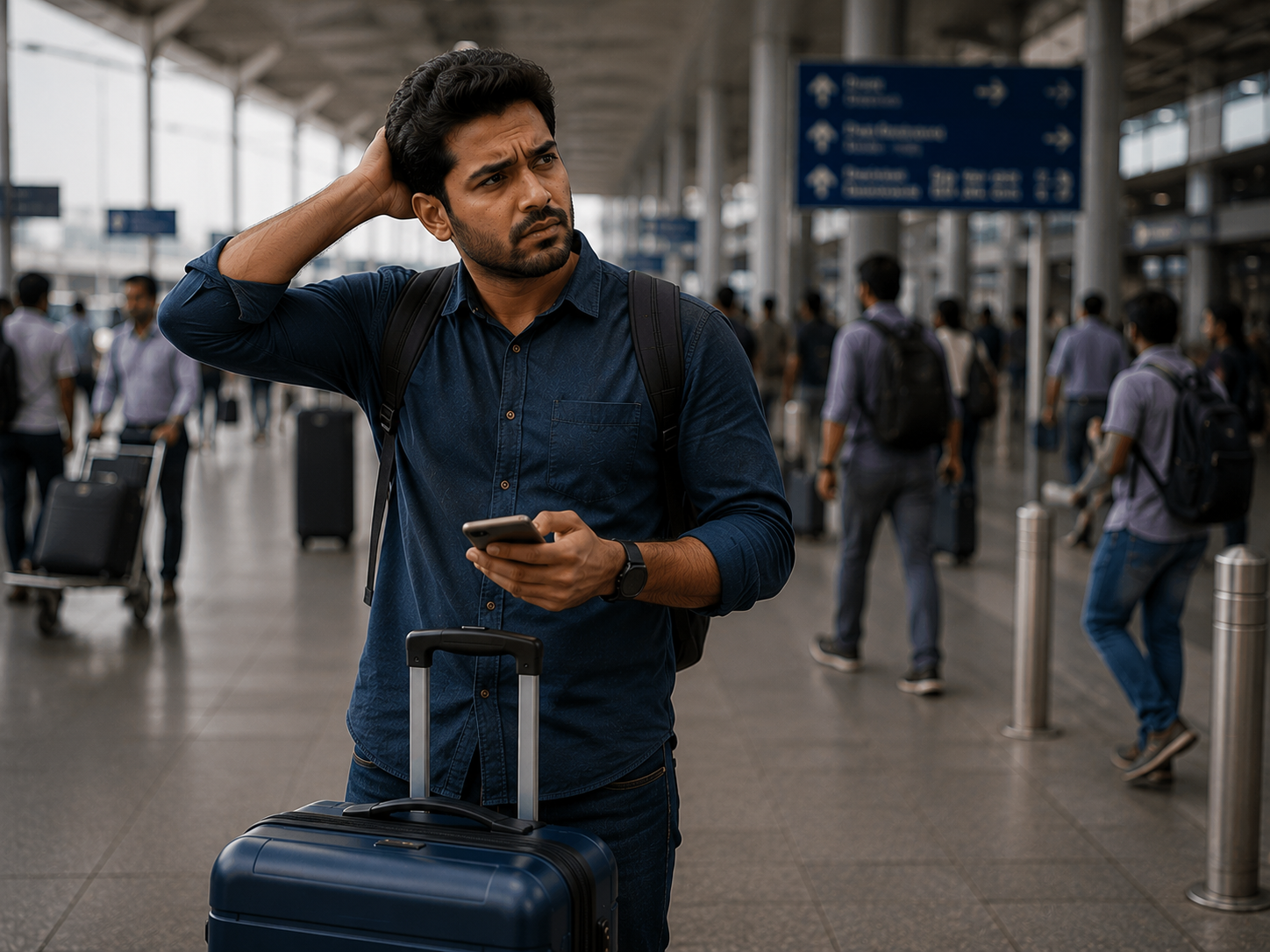
Drags luggage through cafés and meetings
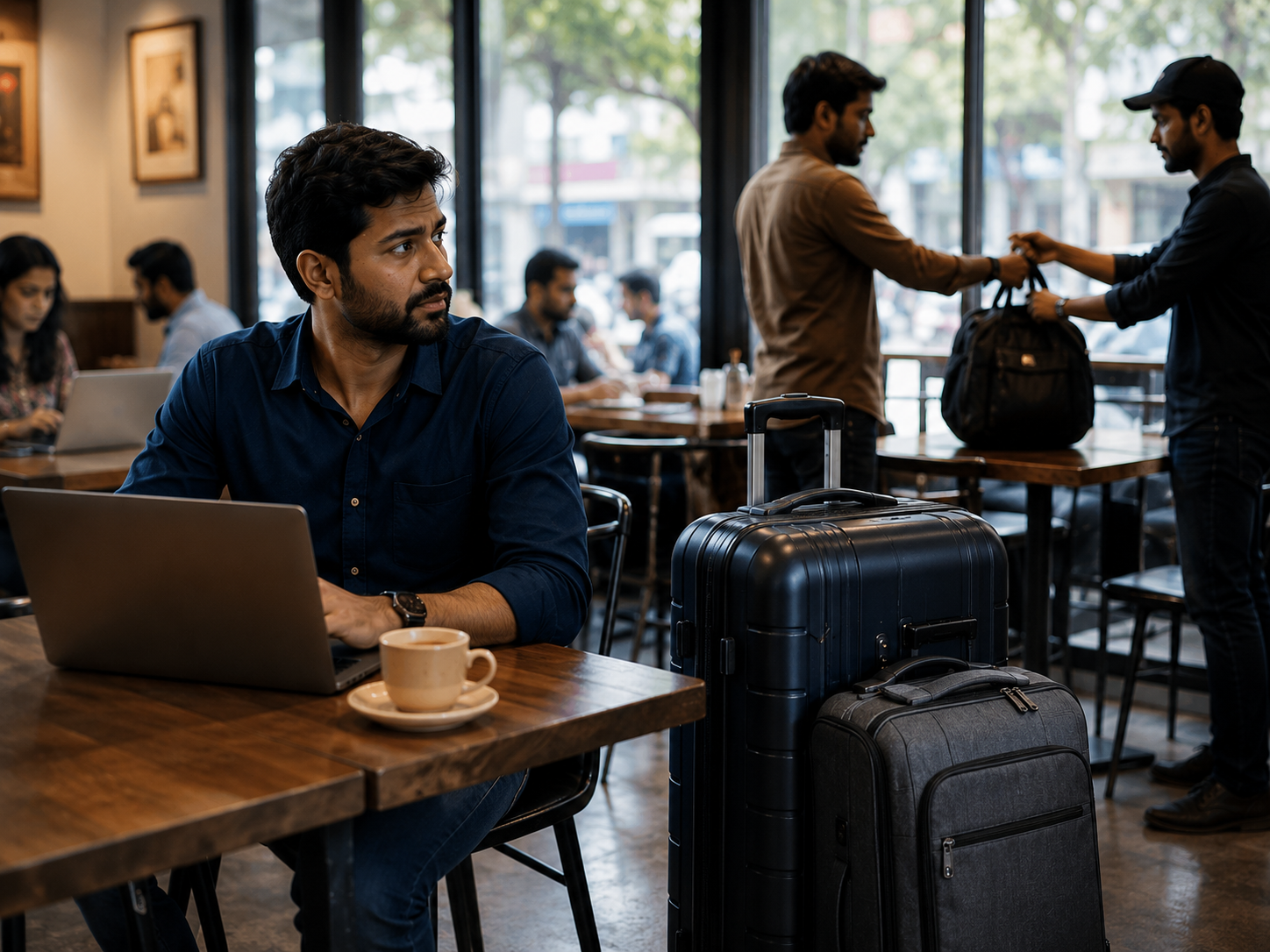
Hands a bag to a stranger for ₹100
Feels
Anxious · Frustrated · Stuck · Embarrassed · Resigned to risk
03 · DEFINE

Framing the problem precisely

A vague problem produces a vague product. Before any screen, three artifacts: a problem statement, three POV statements, and five How Might We questions.

Problem statement

India's 27+ million daily transit travellers need a trustworthy, on-demand way to store and move their luggage because existing infrastructure is unreliable, restrictive, and dignity-stripping — and global solutions like Bounce, Stasher, and Radical Storage have not entered the Indian market.

Point-of-view statements

POV 01

Anaya, a business traveller, needs to drop her bags within 15 minutes of arrival because her conference starts before her hotel will check her in.

POV 02

A backpacker arriving overnight in Bangalore needs to store gear without a same-day train ticket because she's planning to bus to Coorg the next morning.

POV 03

A wedding family on a layover needs to store and later deliver six suitcases to a venue because dragging them through a city for 8 hours is not an option.

How Might We

Five questions that drove every screen.

  1. 01How might we make storage discoverable within 30 seconds of opening the app?
  2. 02How might we earn enough trust on first use that a stranger will leave their bag with a stranger?
  3. 03How might we collect KYC without making the first booking feel bureaucratic?
  4. 04How might we design a payment flow that takes 6 seconds, not 60?
  5. 05How might we offer last-mile delivery without confusing the primary storage job?

📌 Artifact placeholder — HMW poster will replace this list.

Persona

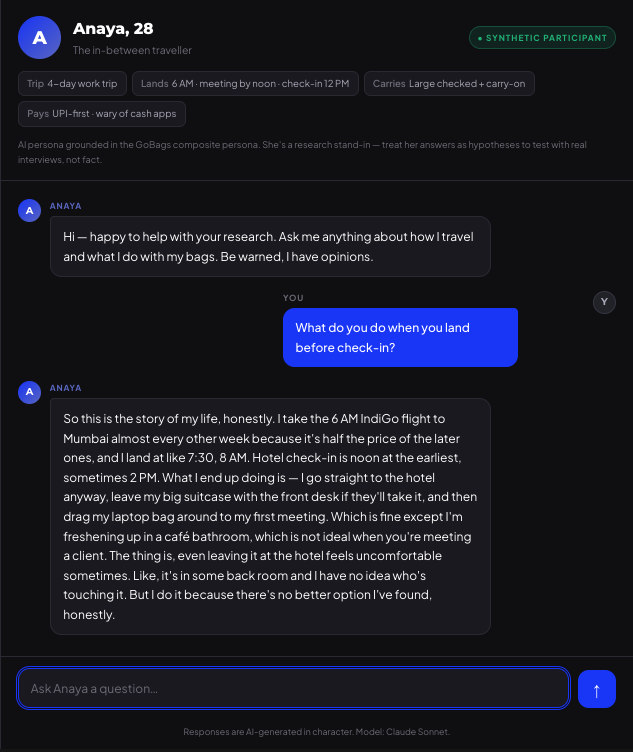
Composite persona

Synthesized from observation, secondary research, and conversations — not a single real interview subject. To be replaced by a research-grounded persona after the planned interviews.

A
Anaya, 28
The in-between traveller
Trip context
4-day work trip; lands before her hotel will check her in
Carries
Large checked + carry-on
Timing pain
Arrives 6 AM. First meeting before noon. Hotel check-in: 2 PM.
Tech profile
High comfort. UPI-first. Distrusts cash-handling apps.
“Drop my bags somewhere safe in 15 minutes and forget about them.”
Jobs to be done
  • When I arrive in a new city before my hotel will take me, I want to store my luggage quickly and securely so I can start my day without dragging suitcases.
  • When I'm done with my city day, I want my bags waiting for me where I'm staying so I don't have to detour.

📌 Artifact placeholder — polished persona card will replace this stylized version.

Current-state journey

Six-stage map of Anaya's day without GoBags — emotion curve dipping into frustration during Realize → Workaround.

📌 Artifact placeholder — journey map with emotion curve will go here.

04 · IDEATE

Exploring before committing

Twenty minutes to diverge — to consider concepts I would later reject. Showing rejected directions is the difference between a case study and a sales pitch.

Concepts considered

Four directions, evaluated against viability, desirability, and feasibility for a 3-hour build.

AHotel-network onlyRejected

Partner with hotels to store luggage in their cloak rooms.

Why rejected: Same trust failures as today. Can't reach non-guests. Replicates existing infrastructure rather than replacing it.

BDoor-to-door luggage shippingRejected

Pickup at origin, ship to destination.

Why rejected: Requires national logistics, multi-day operation. Wrong job — solves shipping, not the transit-day gap.

CMarketplace of café + shop partnersPicked

Bounce-style network with verified storage points.

Why picked: Asset-light. Scales fast. Solves the discovery problem. Maps to a proven international playbook.

DSmart locker networkDeferred

Standalone kiosks at stations and airports.

Why deferred: Capex-heavy, slow rollout. Considered for v2 after the marketplace proves demand.

Divergent thinking — notebook + prompts

No Figma in this project. Exploration happened in two media:

  • Notebook sketches — pencil sketches of screen layouts, main-screen variations, and flow diagrams. The only pre-prompt artifact.
  • Prompt brainstorming with Claude — written exploration of alternative IAs, “what if we open on a list?”, “what if KYC is at the end?” Claude as a divergent-thinking sparring partner.

📌 Artifact placeholder — 2-3 notebook page photographs will sit here with one-line captions.

Information architecture

GoBags app
├── Onboarding (4 screens)
│   ├── Welcome
│   ├── Aadhaar consent
│   ├── Permissions
│   └── Map handoff
├── Discovery
│   ├── Map (default)
│   ├── List view
│   └── Filters
├── Storage detail
│   ├── Photos
│   ├── Hours · Capacity · Rating
│   └── Reserve
├── Booking
│   ├── Duration & price
│   ├── Payment (UPI default)
│   └── Confirmation + QR
└── Add-on
    ├── Delivery scheduling
    └── Delivery tracking

📌 Artifact placeholder — clean IA diagram will replace this code-style tree.

Two named user flows

Flow A · First-time booking with KYC
Welcome → Aadhaar OTP → Permissions → Map → Storage detail → Confirm slot → UPI pay → QR confirmation
Flow B · Returning booking + delivery
Map (last location remembered) → Storage detail → Confirm → UPI → QR → Schedule delivery → Track
05 · PROTOTYPE

Building to test

A prototype is a question made testable. 18 hi-fi screens in HTML and CSS with Claude AI as co-pilot. The discipline came from the previous four phases — the speed came from AI.

The build flow

Most case studies show Sketch → Wireframe → Hi-fi. This project skipped the wireframe entirely.

Step 1
✏️
Notebook sketch
Strategic intent on paper
Step 2
💬
Written prompt to Claude
Precise translation to instruction
Step 3
💻
HTML/CSS hi-fi
Production-quality code output

The most modern build flow possible in 2026. No intermediate Figma. No wireframe round-trip. It works because the upstream phases produced enough clarity that prompts could be specific. Vague phases produce vague prompts. Discipline upstream is what makes execution this fast downstream.

📌 Artifact placeholder — real triptych with notebook sketch + Claude prompt + rendered screen will replace this stylized version.

How AI changed the build

What Claude did
Generated the HTML/CSS scaffolding. Suggested layout patterns. Caught edge cases I'd have missed (empty states, error flows). Rendered Indian-locale specifics like Aadhaar field formats and UPI payment confirmations.
What Claude didn't do
Make the strategic design decisions. Pick the persona. Frame the problem. Choose Aadhaar over phone OTP. Choose map-first over list-first. Decide what to leave out.
What I learned
The discipline of Design Thinking is more important when working with AI, not less. AI accelerates execution. It does not replace the questions that shape what gets executed.

Design decisions worth defending

Four decisions, each shown with the rejected alternative.

01
Aadhaar KYC over phone-OTP signup
PickedAadhaar verification on first booking.
RejectedPhone-OTP-only signup .

Why: Storage requires bilateral trust. Aadhaar is the only ID layer that scales in India and is familiar to the user. Also a competitive moat — global entrants would have to build this from scratch.

02
Map-first, not list-first
PickedDefault screen is a live map with nearby storage capacity.
RejectedSearch bar with text results.

Why: Transit users think in destinations, not brand names. The map answers the right question instantly. Pattern borrowed from Uber/Ola; familiarity earns 4 seconds of attention.

03
UPI as default payment rail
PickedUPI pre-selected, alternatives hidden under “Other”.
RejectedEqual-weight payment method picker.

Why: UPI is what 80%+ of Indian app users actually transact with. Showing five options creates fake choice and adds 6–8 seconds to booking. Optimize for the dominant rail.

04
Storage primary, delivery as add-on
PickedStorage is the headline. Delivery surfaces after booking is confirmed.
RejectedLead with the full storage + last-mile pitch.

Why: Storage is the immediate pain. Delivery is upsell. Selling the upsell first confuses the user, the value prop, and the unit economics.

The 18 screens

10 of the 18 have been published. Once you map which screen belongs to which flow step, captions will sit alongside each.

📌 Existing 10 prototype screenshots will be migrated here with one-line captions per screen.

06 · TEST

Validating with users

Validation in progress

A prototype that hasn't met a real user is still a hypothesis. Here's the validation plan.

Usability test protocol

  • Method: Moderated remote usability tests via Maze and Figma prototype.
  • Participants: 5 users matching the Anaya persona. Recruited from LinkedIn travel groups and college-alumni networks.
  • Tasks:
    1. “You've arrived in Bengaluru with two suitcases. Find storage near MG Road.”
    2. “Complete a booking and pay.”
    3. “Schedule delivery to a hotel later today.”
  • Success metrics: Task completion rate, time-to-complete, error rate, SUS score, post-test interview themes.

What I'm specifically testing for

Hypothesis 01
Map-first is more intuitive than list-first
Track time-to-first-tap on map vs alternative list-first prototype
Hypothesis 02
Aadhaar consent doesn't kill conversion
Measure dropout at consent screen
Hypothesis 03
UPI default reduces payment time
Time payment-screen completion
Hypothesis 04
Delivery as add-on doesn't get missed
Percentage of users who discover and use delivery

Early iteration hypotheses

Three things I already suspect will need work, even before testing:

  • Aadhaar screen will need a one-line trust statement (“Your data is encrypted and never stored”).
  • Partner photos matter more than ratings. People judge trust visually first.
  • Booking confirmation probably needs an offline-accessible QR fallback for users on patchy mobile data.
07 · OUTCOMES

What shipped

The counts are honest. The honesty is the differentiator.

18
Screens designed
2
Flows shipped
~3h
Blank canvas → working HTML
0
User interviews completed (planned: 5–7)
0
Usability tests completed (planned: 5)
08 · REFLECTION

What three hours taught me

🤖
Claude AI is a creative co-pilot, not a designer

18 screens, two flows, and India-specific patterns in roughly three hours. Claude didn't just write code — it caught edge cases, suggested empty states, and rendered locale specifics. But it didn't choose the persona, frame the problem, or pick Aadhaar over phone-OTP. Strategy stayed mine.

🇮🇳
India has a real infrastructure gap

Tens of millions of daily transit passengers. Zero scaled city-storage solution. The market Europe solved a decade ago is still wide open here.

💡
Discipline matters more at speed

The compressed sprint worked because of the design thinking phases, not despite them. Skipping Empathize would have produced a prettier wrong product.

Ideas deserve proof, not decks

This idea sat in my notes for a year. Three hours to ship made it real, shareable, and defensible. The gap between idea and prototype is now closer than the gap between prototype and real product.

09 · WHAT'S NEXT

The honest take

“This isn't a startup. It's proof that the idea is real, the pain is real, and the discipline of design thinking holds up at AI-accelerated speed.”
Next steps for the project
  1. 01Run the 5 planned user interviews at Bengaluru station and KIA airport.
  2. 02Conduct 5 moderated usability tests on the prototype.
  3. 03Iterate the 18 screens based on findings.
  4. 04Talk to 3–5 café partners about onboarding logistics.